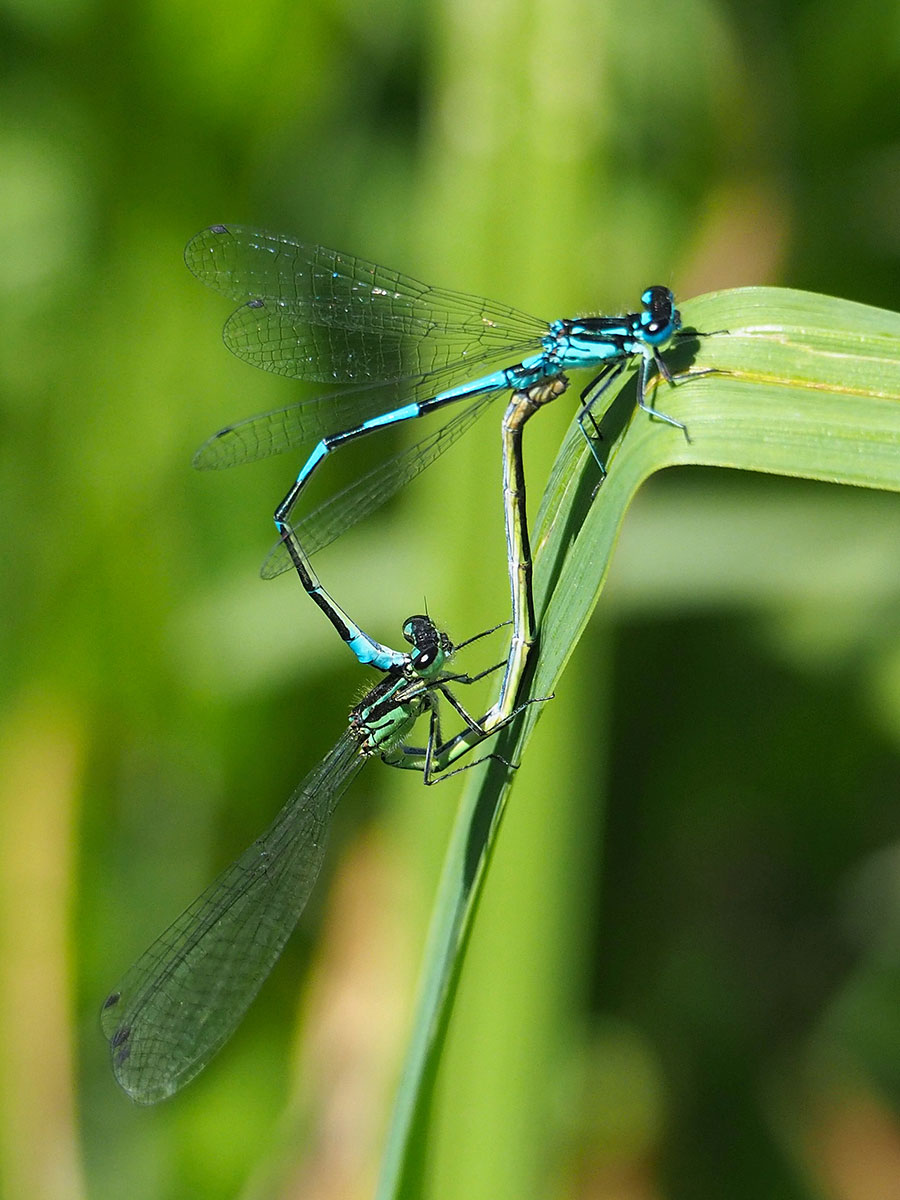
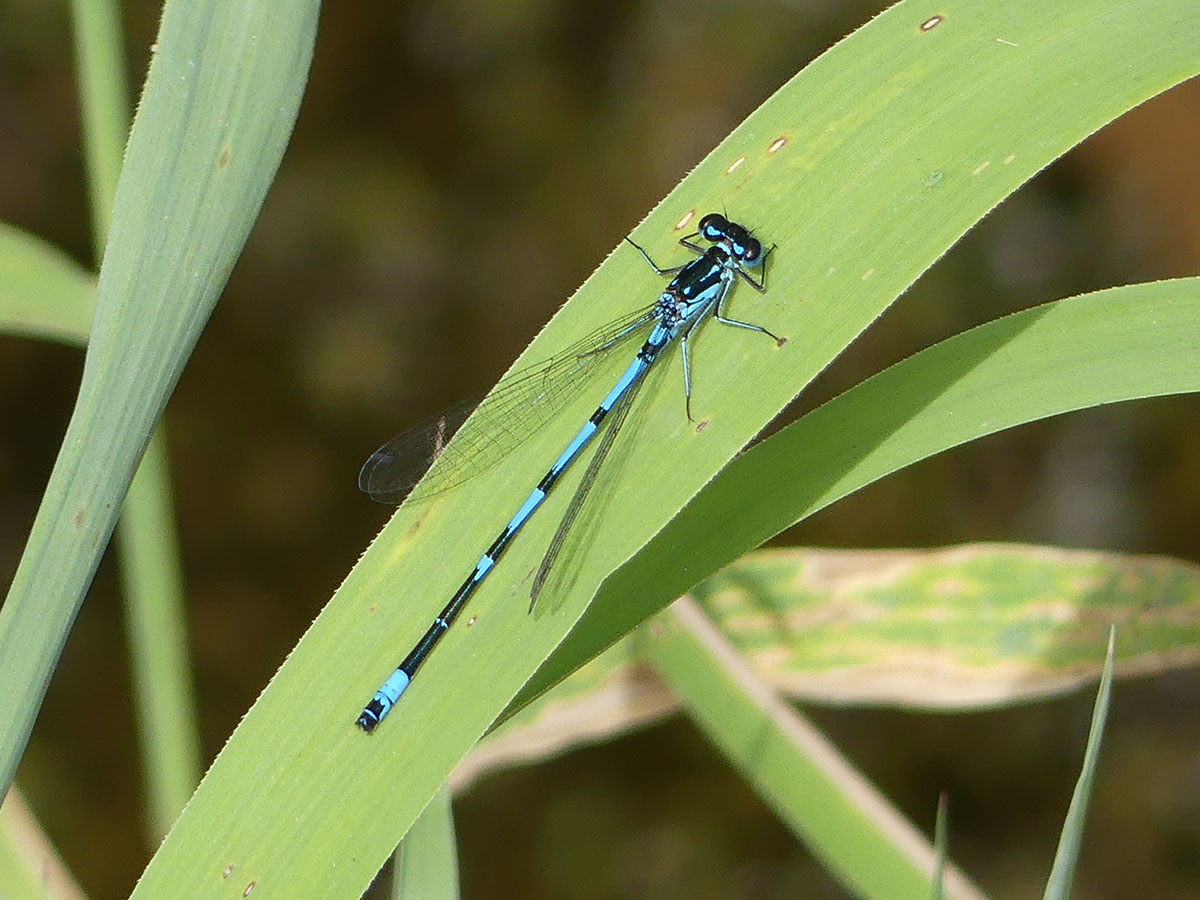
At first glance this very variable species is easily confused with our other two bright blue damselflies (the Azure and Common Blue Damselfly). However, its limited range means this is the least likely to be seen. The ‘exclamation mark’ stripes along the thorax and the ‘wine glass’ marking at the start of the abdomen in the male Variable are a help, as is the darker blue when observed with the other species. The female has two forms: one is similar to the male, but with a richer blue; the other is dark, with greenish-yellow markings on the sides.
National status
Scattered and uncommon in mainland Britain, with greatest concentrations in parts of the south and east. In these areas, however, given the right habitat, it can occur in large numbers.
Status in Sussex
Scarce apart from on the Pevensey Levels and, to a lesser extent, Amberley Wildbrooks. However, the scattering of occasional records across the county suggests that this species may be under-recorded; if in doubt, recorders may have opted to exclude it from their list of sightings, as it is the rarest of the blue damselflies and is listed in the Sussex Rare Species Inventory.
Distribution at 1km scale
Historical records
W. Unwin is quoted by Lucas and Bloomfield (1905) and others as having recorded this species near the Winterbourne and elsewhere near Lewes. N. Moore reported it to be a plentiful species in the Ouse Valley north of Lewes in 1945, but it was not recorded in the 1965-1978 survey (Chelmick 1979) or in the one for the Dragonflies of Sussex (2004), although both highlight its presence in the Ouse Brooks south of Lewes. Dannreuther (1945) listed this species as “unrecorded in West Sussex”. Surprisingly, what is now regarded as its West Sussex stronghold at Amberley Wildbrooks was not discovered until F. Penfold found two there in 1962 (Chelmick 1979).
Flight times
Mid April - early August. In the two decades since the Millennium, the first flight date has moved forward by nearly a month.
Phenology (adult)
1 / 1
Variable Damselfly habitat at Pevensey Levels Photo: Fran Southgate
Habitat
Fens, water meadows, marshes and shallow ponds; also slow-moving water as in dykes and canals. At Pond Lye near Burgess Hill and Ashburnham Park near Burwash found at the edge of shallow lakes with a very dense and wide emergent vegetation margin dominated by Iris and Typha. (D. Chelmick pers. comm.).
Conservation
Its favoured habitat in Sussex is traditionally managed grazing pasture and associated ditches, where the water level is high and there is a good range of aquatic and marginal plants. The key practical conservation measure is sympathetic rotational ditch management, but lobbying for more sustainable agriculture practices is critical at policy level.
Similar species
See Azure Damselfly for key differences from similar species and comparative photos.
At first glance this very variable species is easily confused with our other two bright blue damselflies (the Azure and Common Blue Damselfly). However, its limited range means this is the least likely to be seen. The ‘exclamation mark’ stripes along the thorax and the ‘wine glass’ marking at the start of the abdomen in the male Variable are a help, as is the darker blue when observed with the other species. The female has two forms: one is similar to the male, but with a richer blue; the other is dark, with greenish-yellow markings on the sides.
1 / 4
pair mating Photo: David Sadler
2 / 4
female Photo: David Sadler
3 / 4
male Photo: Simon Linington
4 / 4
male Photo: Simon Linington
National status
Scattered and uncommon in mainland Britain, with greatest concentrations in parts of the south and east. In these areas, however, given the right habitat, it can occur in large numbers.
Status in Sussex
Scarce apart from on the Pevensey Levels and, to a lesser extent, Amberley Wildbrooks. However, the scattering of occasional records across the county suggests that this species may be under-recorded; if in doubt, recorders may have opted to exclude it from their list of sightings, as it is the rarest of the blue damselflies and is listed in the Sussex Rare Species Inventory.
Distribution at 1km scale
Historical records
W. Unwin is quoted by Lucas and Bloomfield (1905) and others as having recorded this species near the Winterbourne and elsewhere near Lewes. N. Moore reported it to be a plentiful species in the Ouse Valley north of Lewes in 1945, but it was not recorded in the 1965-1978 survey (Chelmick 1979) or in the one for the Dragonflies of Sussex (2004), although both highlight its presence in the Ouse Brooks south of Lewes. Dannreuther (1945) listed this species as “unrecorded in West Sussex”. Surprisingly, what is now regarded as its West Sussex stronghold at Amberley Wildbrooks was not discovered until F. Penfold found two there in 1962 (Chelmick 1979).
Flight times
Mid April - early August. In the two decades since the Millennium, the first flight date has moved forward by nearly a month.
Phenology (adult)
1 / 1
Variable Damselfly habitat at Pevensey Levels Photo: Fran Southgate
Habitat
Fens, water meadows, marshes and shallow ponds; also slow-moving water as in dykes and canals. At Pond Lye near Burgess Hill and Ashburnham Park near Burwash found at the edge of shallow lakes with a very dense and wide emergent vegetation margin dominated by Iris and Typha. (D. Chelmick pers. comm.).
Conservation
Its favoured habitat in Sussex is traditionally managed grazing pasture and associated ditches, where the water level is high and there is a good range of aquatic and marginal plants. The key practical conservation measure is sympathetic rotational ditch management, but lobbying for more sustainable agriculture practices is critical at policy level.
Similar species
See Azure Damselfly for key differences from similar species and comparative photos.


-Variable-Damselfly.jpg)