National status
Rare but currently annual migrant. First recorded 1996, Gloucestershire; has bred in Cornwall (BDS website).
Status in Sussex
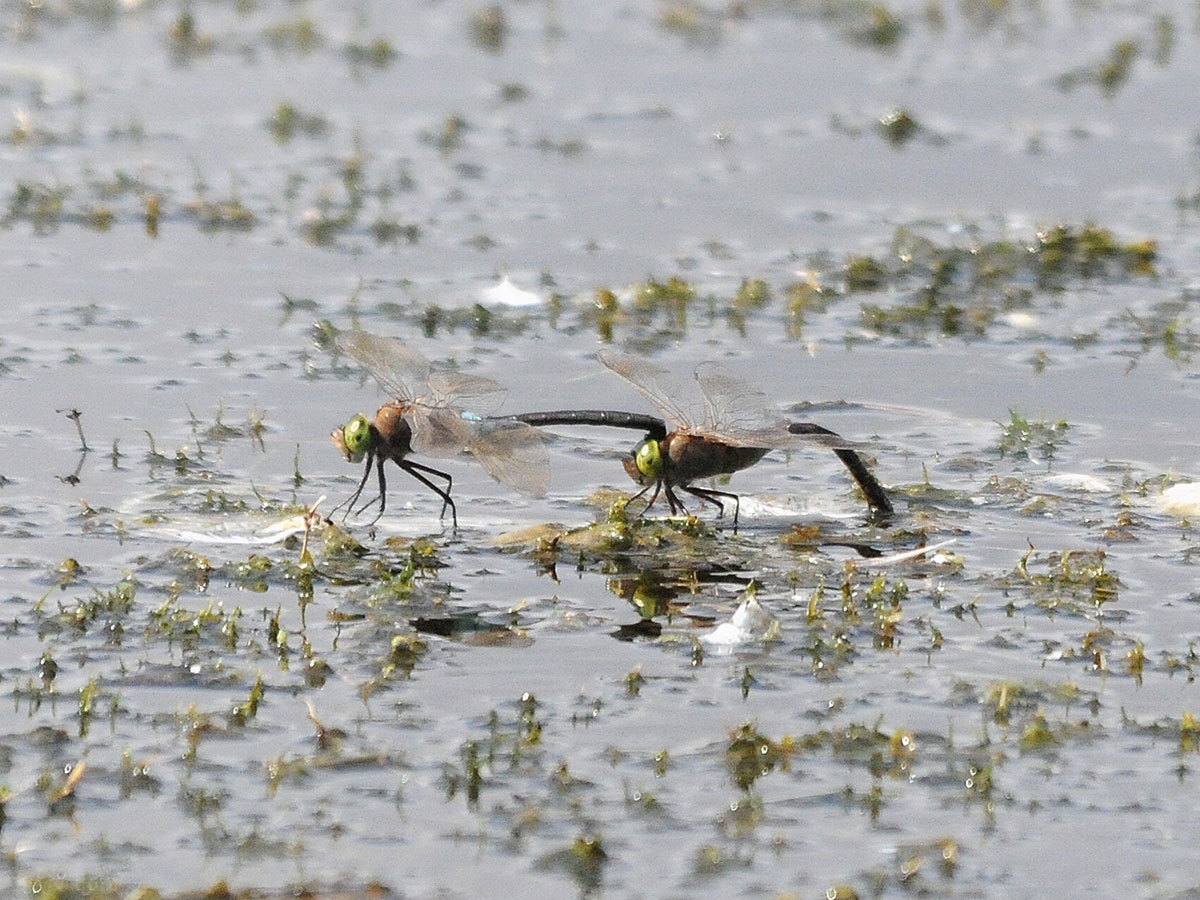
The species has been recorded in eight years between the Millennium and 2020, most consistently from West Rise Marsh, Eastbourne and Rye Harbour though with records also from Buchan CP, East Chiltington, Pett Level and Warnham LNR. No more than four have been seen at a given site and date. This species has been seen copulating and ovipositing at West Rise Marsh.
Distribution at 1km scale
Historical records
The first records were of single insects at Rye Harbour on 23 and 27 July 1997 and 8 August 1998 and in the Cuckmere at West Dean on 18 July 1999.
Flight times
July - August.
Phenology (adult)
Habitat
Breeds in ponds and small lakes and can tolerate brackish water (BDS website).
Similar species
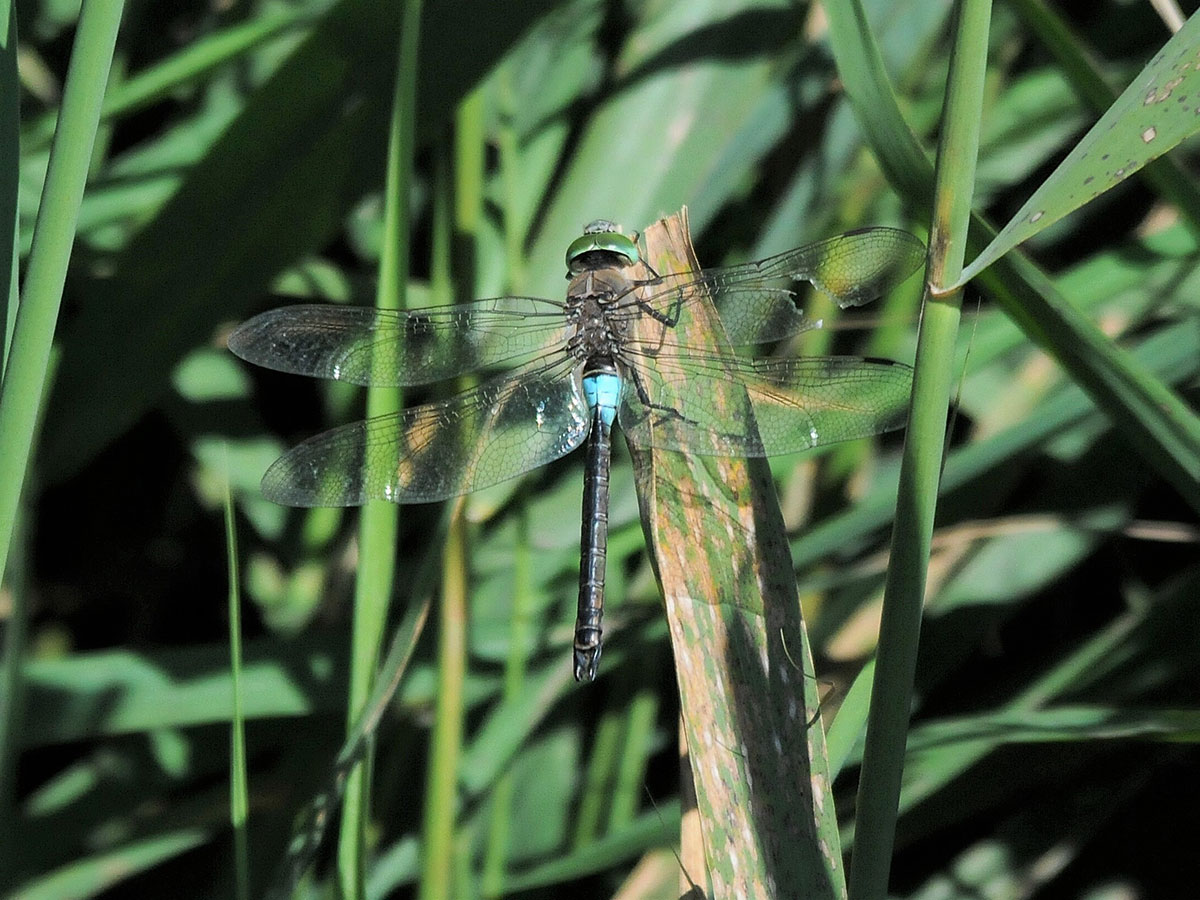
See Southern Hawker for a discussion of possible confusion species. The blue band at the front of the mainly darkish abdomen is distinctive in both male and some females with only the male of the rarer Vagrant Emperor having something similar and that has brownish rather than greenish eyes.
This Emperor species is gradually becoming established at one or two sites in Sussex though its status remains precarious.
1 / 4
male Photo: David Sadler
2 / 4
male Photo: David Sadler
3 / 4
male Photo: David Sadler
4 / 4
ovipositing Photo: David Sadler
National status
Rare but currently annual migrant. First recorded 1996, Gloucestershire; has bred in Cornwall (BDS website).
Status in Sussex
The species has been recorded in eight years between the Millennium and 2020, most consistently from West Rise Marsh, Eastbourne and Rye Harbour though with records also from Buchan CP, East Chiltington, Pett Level and Warnham LNR. No more than four have been seen at a given site and date. This species has been seen copulating and ovipositing at West Rise Marsh.
Distribution at 1km scale
Historical records
The first records were of single insects at Rye Harbour on 23 and 27 July 1997 and 8 August 1998 and in the Cuckmere at West Dean on 18 July 1999.
Flight times
July - August.
Phenology (adult)
Habitat
Breeds in ponds and small lakes and can tolerate brackish water (BDS website).
Similar species
See Southern Hawker for a discussion of possible confusion species. The blue band at the front of the mainly darkish abdomen is distinctive in both male and some females with only the male of the rarer Vagrant Emperor having something similar and that has brownish rather than greenish eyes.